.png)
The Complete Birding Guide to Pitt Street Bridge


Why this Mount Pleasant landmark is one of South Carolina’s finest coastal birding destinations.
Few places embody the South Carolina Lowcountry quite like Pitt Street Bridge. Nestled beside Charleston Harbor in the heart of the historic Old Village, this former bridge has become one of the finest places in the region to experience coastal birds and wildlife.
Over the past decade, I’ve spent hundreds of hours exploring Pitt Street Bridge through every season, tide, and nearly every kind of weather. The insights in this guide are based on a decade of firsthand experience, 150 eBird checklists, and nearly 150 bird species I’ve personally recorded at this remarkable hotspot.
It’s one of the places where I’ve learned the most about Charleston’s coastal ecosystem, and I return again and again because every visit is different. The tides change. The light changes. The seasons transform the landscape and no two visits are ever quite the same.
This guide is designed to help you experience Pitt Street Bridge the way I’ve come to know it over the years. We’ll explore how the tides shape the birding, what to look for in each season, where different species are most likely to appear, and some of the wildlife encounters that make this place so memorable. Whether you’re visiting for the first time or have walked Pitt Street for years, understanding these rhythms can completely change what you notice.
Pitt Street Bridge is not simply one of my favorite places to bird in Charleston. It is also one of the most accessible and rewarding coastal birding locations in South Carolina.

Why You Can Trust This Guide
I’ve explored Pitt Street Bridge during every month of the year, observing how the birds, tides, and coastal ecosystem change with the seasons.
Nearly 150 bird species personally recorded at Pitt Street Bridge since 2014
150 eBird checklists documenting birds across every season
Hundreds of hours studying the birds, tides, and coastal ecosystem of this hotspot
Guided countless visitors through one of Charleston’s most productive coastal birding locations
Pitt Street Bridge Birding at a Glance
For readers looking for the essentials, here’s the quick guide:
Best overall time: Early morning, especially around sunrise.
Best tide for Clapper Rails: Falling tide through low tide, when rails often walk along exposed creek edges and muddy openings in the marsh.
Best tide for marsh sparrows: Rising tide through high tide, when sparrows are pushed toward the tops and edges of the cordgrass.
Best tide for shorebirds: Falling tide through low tide.
Best season for Black Skimmers and nesting seabird activity: Late spring through summer.
Best season for loons, grebes, mergansers, and marsh sparrows: Winter into early spring.
Signature birds: Clapper Rail, American Oystercatcher, Black Skimmer, Royal Tern, Gull-billed Tern, Seaside Sparrow, Nelson’s Sparrow, Snowy Egret, Tri-colored Heron, Willet, Semipalmated Plover, Osprey and Brown Pelican.
Other wildlife: Bottlenose Dolphins, Diamondback Terrapins, stingrays, juvenile sharks, American Mink, fiddler crabs, blue crabs, shrimp, mullet and more.
Experience level: Excellent for beginners, families, experienced birders, and anyone who enjoys exploring nature.
Most important advice: Check the tide, arrive early, walk slowly, and listen as much as you look.

Why Pitt Street Bridge Is So Special
What makes Pitt Street Bridge truly exceptional isn’t just the number of birds you can see, it’s how many different coastal habitats come together in one remarkably accessible place. Within a short walk, you can overlook expansive salt marshes, winding tidal creeks, oyster beds, broad mudflats, open harbor water, coastal thickets and mature live oaks. Each habitat supports a different community of birds, so every change in the tide or season creates a new experience.
Unlike many coastal marshes where birds remain far away, Pitt Street allows visitors to walk directly beside the habitat. Visitors are often nearly eye level with Clapper Rails, Marsh Wrens, Seaside Sparrows, herons, egrets, and shorebirds, while Royal Terns and Black Skimmers regularly pass directly overhead. That close perspective creates outstanding opportunities not only for birdwatching, but for understanding how one of North America’s most productive coastal ecosystems functions.
On any given morning you might watch a Clapper Rail slip through the cordgrass, American Oystercatchers feeding on the oyster beds, Black Skimmers carrying fish back toward Crab Bank, Royal Terns flying overhead, and Marsh Wrens singing from only a few feet away. Few places in South Carolina allow you to experience as much of the Lowcountry’s coastal ecosystem in such a short walk. It’s one of the many reasons I find myself returning to Pitt Street Bridge, season after season.
A Quick History of Pitt Street Bridge
Long before Pitt Street Bridge became one of South Carolina’s most beloved waterfront parks and birding destinations, it served as an important transportation route connecting Mount Pleasant and Sullivan’s Island. A simple plank bridge crossed Cove Inlet before the Revolutionary War, and during the Civil War, members of the H.L. Hunley crew crossed this route on their way to Breach Inlet to test the famous Confederate submarine. A trolley bridge replaced the original crossing in 1898 before the current concrete bridge was completed in 1927.

As newer bridges took over automobile traffic, Pitt Street Bridge gradually transformed from a vital transportation corridor into one of the Lowcountry’s most beloved public spaces.
Today, the bridge serves an entirely different purpose. Instead of carrying commuters, it welcomes families enjoying an evening walk, fishermen casting into Charleston Harbor, and birders and nature enthusiasts discovering one of South Carolina’s richest and most accessible coastal ecosystems.
That transformation is part of what makes Pitt Street Bridge so special. Few places have evolved from an important piece of local transportation history into such a remarkable place to experience the Lowcountry’s coastal ecosystem. Today, the bridge connects people not to another town, but to nature itself.

The Salt Marsh: A Living Ecosystem
It is easy to stand on Pitt Street Bridge and admire the scenery.
The endless stretches of cordgrass.
The winding tidal creeks.
The oyster beds.
The harbor reflecting the morning sky.
The sweeping views of downtown Charleston and the Ravenel Bridge.
What many visitors don’t immediately realize is that they are standing beside one of North America’s most productive natural ecosystems.
South Carolina is home to roughly 500,000 acres of salt marsh, one of the largest expanses of this habitat on the Atlantic coast. These marshes form the foundation of the Lowcountry’s extraordinary biodiversity and help explain why Charleston supports such remarkable birdlife.

Twice each day, the tides flood the marsh with seawater before slowly draining back toward Charleston Harbor. That constant rhythm delivers nutrients, oxygen, and tiny organisms that fuel an incredible web of life.
Everything here is connected.
Tiny plants and microscopic organisms feed shrimp, crabs, worms, shellfish, and small fish.
Those animals feed larger fish.
The fish sustain terns, pelicans, cormorants, dolphins, sharks, and countless other predators.
As the tide falls, broad mudflats become feeding grounds for migrating shorebirds. Oyster beds provide food for American Oystercatchers, Willets, and other coastal species. Dense cordgrass shelters Clapper Rails, Marsh Wrens, Seaside Sparrows, Nelson’s Sparrows, and Saltmarsh Sparrows, many of which spend their lives hidden deep within the marsh.
Nothing exists in isolation.
Every plant, every tide, and every animal depends on something else.
One of my favorite things to share during bird walks is that we are never just watching birds...we’re watching an entire coastal ecosystem working together.
The American Oystercatcher feeding along the oyster beds, the Clapper Rail disappearing into the dense marsh grass, Black Skimmers slicing across the tidal creeks with their lower bills tracing the water, and Bottlenose Dolphins chasing baitfish through the shallows are all connected by the same habitat.
Once you begin noticing those connections, the marsh becomes far more than beautiful scenery.
It becomes a living world.
Even when the marsh appears quiet, life is everywhere. Fiddler crabs wave oversized claws, periwinkle snails climb cordgrass stems, finger mullet weave through shallow creeks, blue crabs patrol the marsh edge, and herons wait with extraordinary patience. Then, without warning, a dolphin surfaces, a tern dives, a Clapper Rail steps into the open, or a Marsh Wren bursts into song.

Understanding the Tides
If there is one thing that will improve your birding at Pitt Street Bridge more than anything else, it is learning to read the tide.
Many first-time visitors arrive without checking it. They still enjoy the scenery, but they often miss the conditions that bring certain birds closest to the bridge.
No single tide is best for everything. Each stage offers a different kind of birding because the tide does not simply move the water. It moves the wildlife.

Rising Tide and High Tide
As the tide rises, the marsh gradually fills with water, changing where birds feed, rest, and hunt. While no single tide is best for everything, rising and high tides create some of the best opportunities to observe species that spend much of their lives hidden deep within the marsh.
This is one of my favorite times to search for:
• Marsh Wrens
• Seaside Sparrows
• Nelson's Sparrows (winter)
• Saltmarsh Sparrows (winter)
As the water rises, Marsh Wrens and the marsh sparrows often climb higher into the cordgrass, making them much easier to observe than they are at lower tides. Patient birders may suddenly spot a Seaside Sparrow perched in the open or hear a Marsh Wren singing from just a few feet away.

Rising water also brings wildlife activity closer to the bridge. Ospreys frequently hunt over the tidal creeks and mudflats, diving for fish surprisingly close to observers. Terns often plunge into the water near the bridge, while Brown Pelicans, Double-crested Cormorants, herons, and egrets gather on the pilings and remnants of the old bridge extending into the harbor, where they rest, preen, and watch the surrounding water.
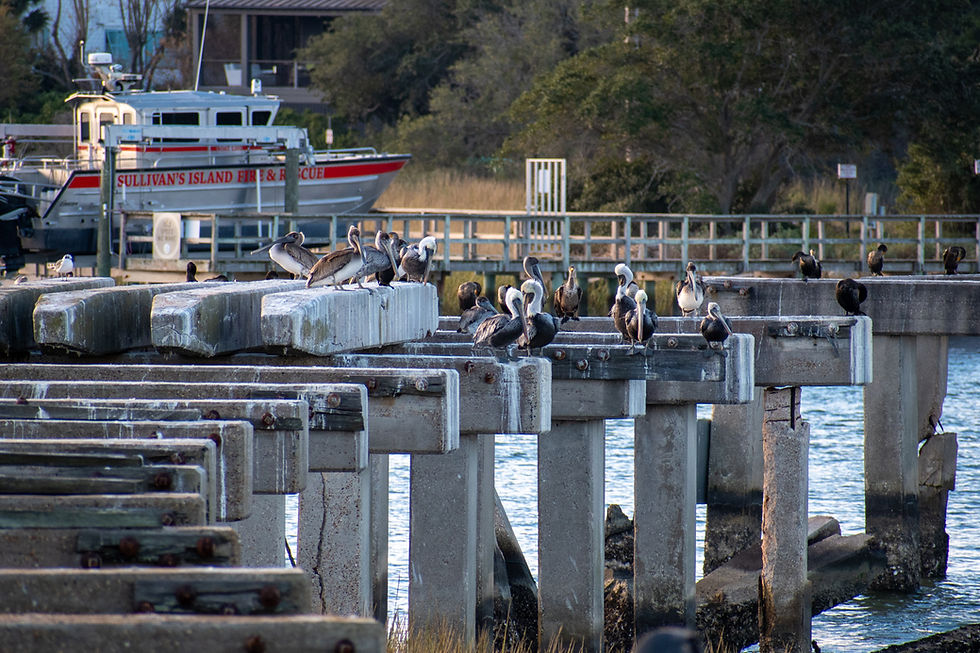
Swallows are another treat. Barn Swallows are common during the warmer months, while Tree Swallows become abundant in winter. Both can often be seen feeding low over the marsh and tidal creeks, especially as rising water concentrates insect activity.

During winter, deeper water near the bridge often brings ducks, loons, grebes, Belted Kingfishers, and other waterbirds into excellent viewing range. Many of these species spend much of their time farther out in Charleston Harbor but can be surprisingly close when conditions are right.
Falling Tide
As the water begins draining from the marsh, mudflats and oyster beds slowly emerge.
This is when Pitt Street Bridge really begins to come alive.
Shorebirds spread across the newly exposed feeding habitat. Willets patrol the creek edges, American Oystercatchers work the oyster beds, especially those just beneath the water’s surface, and migrating peeps, dowitchers, plovers, turnstones, and yellowlegs begin searching the mud for food.

I’ve also found that Clapper Rails often become more active as the tide falls, slipping out of the cordgrass to forage along muddy creek edges and exposed marsh. Quiet mornings during a falling tide can provide some of the best opportunities to watch this remarkable bird walking in the open, calling from the marsh edge, or chasing small crabs through the mud.
Falling tides can also bring surprises. Ospreys continue hunting over the shallow creeks and flats, Great Blue Herons and Snowy Egrets stalk the exposed flats, and Belted Kingfishers often patrol the creeks during the cooler months.

During migration, nearly every falling tide carries the possibility of something unexpected. A flock of Whimbrel may drop onto the mudflat, a Red Knot might appear among the shorebirds, or an uncommon migrant could stop briefly before continuing its journey. That’s one of the things I love most about birding Pitt Street Bridge. Every falling tide tells a different story.

Low Tide
Low tide exposes the greatest amount of feeding habitat.
Broad mudflats may hold large numbers of shorebirds feeding on the diverse invertabrate, while thousands of fiddler crabs emerge from their burrows.

One of my favorite sights at Pitt Street Bridge is watching Gull-billed Terns hunt fiddler crabs across the exposed marsh. Unlike most terns, which primarily catch fish, Gull-billed Terns regularly patrol the marsh searching for crabs, insects, and other small prey. Watching one hover, drop onto the mud, and rise with a fiddler crab is one of the most fascinating wildlife behaviors you can witness here.
Low tide can also offer some of the best opportunities to actually see a Clapper Rail. As the water drains from the marsh, rails often venture into exposed openings to feed, giving patient observers a better chance to watch a bird that spends much of its life concealed within the cordgrass.
Even when bird activity slows, the marsh itself becomes fascinating at low tide. Thousands of fiddler crabs emerge across the exposed mud, schools of small fish become concentrated in shallow pools, and expanses of oyster reef emerge from beneath the water. Much of the oyster habitat visible from Pitt Street has developed around shells placed on the mudflat, providing hard substrate where new oysters can attach and grow. At low tide, you can see an entire layer of the ecosystem that disappears beneath the water only hours later.

Migration often brings Marbled Godwits to Pitt Street Bridge, where they forage across the exposed mudflats during falling and low tides. Pitt Street Bridge is one of the best places in the Charleston area to observe this striking shorebird.

The Tide Is the Engine
The tide is what makes the marsh work.
It concentrates baitfish in tidal creeks.
It exposes crabs, shrimp, oysters, and other invertebrates on the mudflats.
It changes where birds feed, rest, and hunt.
It determines where herons, shorebirds, terns, dolphins, and countless other animals are most likely to be found.
Once you begin learning to read the tide, you stop wondering where the wildlife will be and start anticipating where it will appear.
Understanding the tide doesn’t just improve your birding. It changes the way you experience Pitt Street Bridge. Every rising and falling tide creates a different landscape, a different cast of wildlife, and a completely different visit.
People often ask me what the best time of year is to visit Pitt Street Bridge.
My answer is always the same. There isn’t one.
Every season offers something different, and that’s one of the reasons I never get tired of returning. The birds change, the tides change, and every few weeks the marsh seems to tell a different story.

Spring
Spring brings new energy to the marsh.
Resident birds become more vocal as they establish territories and begin nesting. Clapper Rails call frequently from the cordgrass, Boat-tailed Grackles display throughout the park, and Marsh Wrens fill the marsh with their energetic, bubbling songs. Spring migration brings a changing mix of shorebirds through the marsh, while the surrounding live oaks and coastal thickets may attract colorful songbirds moving through the Charleston area.

Yellow-crowned Night-Herons also become regular sights as the breeding season gets underway. Adults and recently fledged juveniles often hunt fiddler crabs along the marsh edge, making Pitt Street Bridge one of the best places in the Charleston area to observe this coastal specialist.
Spring is a season of movement. Every visit carries the possibility of discovering a newly arrived migrant.

Summer
Summer is one of the liveliest times of year at Pitt Street Bridge.
Nearby Crab Bank is one of Charleston’s most important seabird nesting colonies, and Pitt Street provides a front-row seat to the daily movement between the harbor and the island. Black Skimmers, Royal Terns, Least Terns, Gull-billed Terns, Brown Pelicans, and Laughing Gulls pass overhead throughout the day, many carrying fish, shrimp, or fiddler crabs back to hungry chicks.
The marsh itself is equally busy.

Marsh Wrens fill the cordgrass with their cheerful, bubbling songs while tending to their remarkable ball shaped nests, carefully woven from marsh grasses and suspended above the water. As the tide rises and falls, these nests move with the cordgrass, helping keep them above the changing water levels.
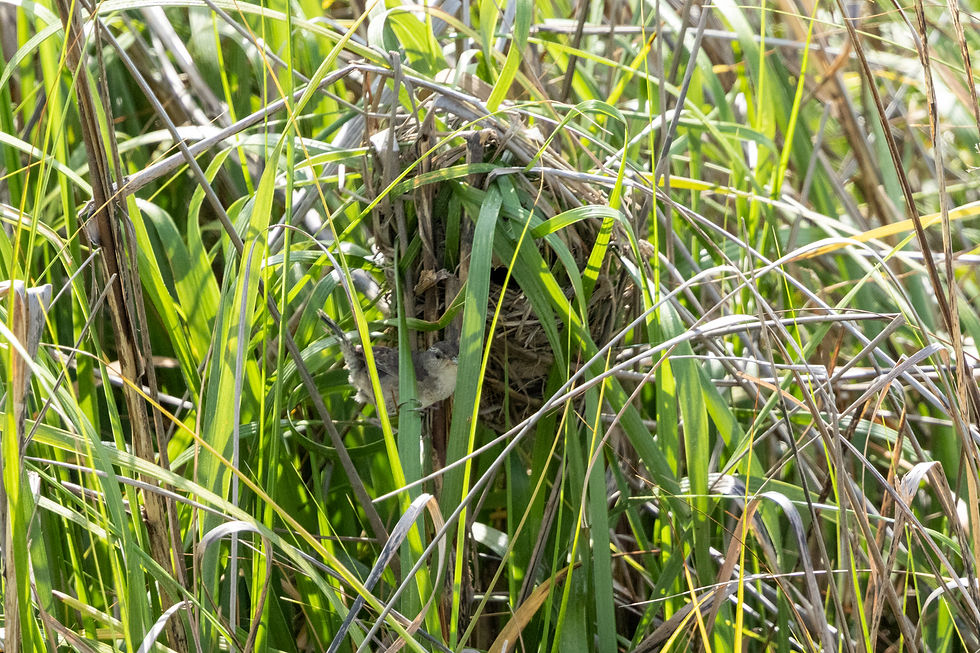

Resident birds are busy everywhere you look. Red-winged Blackbirds defend territories throughout the marsh, Northern Mockingbirds raise young in the surrounding shrubs, and Orchard Orioles often nest in the trees near the parking area.

Summer is also one of the best seasons for watching bird behavior rather than simply identifying species.
Fishing.
Courtship displays.
Territorial disputes.
Adults carrying food to their young.
Young birds taking their first flights.
There is almost always something happening.
Fall
Fall is my favorite season for birding in the Charleston area. Migration transforms the Lowcountry almost daily, and Pitt Street Bridge is one of my favorite places to experience it. Every falling tide can bring a different collection of shorebirds as they stop to rest and refuel before continuing south. Dowitchers, peeps, yellowlegs, turnstones, plovers, godwits, and other migrants spread across the mudflats and oyster beds, often changing from one week to the next.
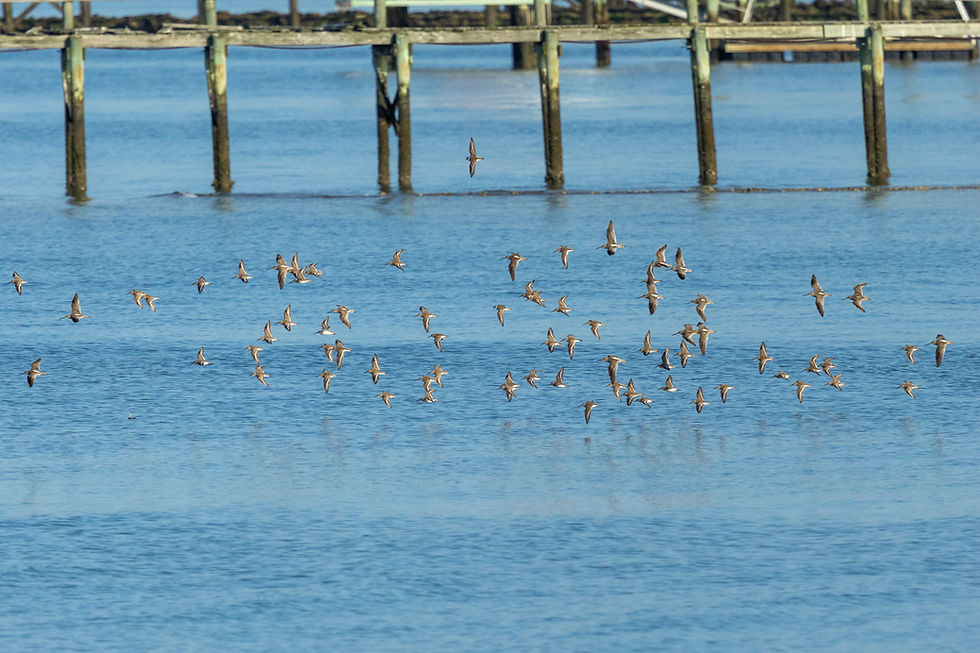
Migration isn’t limited to the shoreline. The trees and shrubs around the parking area can also attract a surprising variety of songbirds moving through the Lowcountry. Warblers, vireos, flycatchers, orioles, sparrows and other migrants may pause for a day before continuing their journey, making every visit a little different.

That’s what I love most about fall migration. No two mornings are exactly alike. One day may be filled with familiar species, while the next could produce an uncommon shorebird, an unexpected songbird, or another memorable surprise.
Winter
Winter transforms Pitt Street Bridge into one of Charleston’s finest places to observe birds.
Charleston Harbor fills with wintering waterbirds, including Common Loons, Horned Grebes, Buffleheads, Hooded Mergansers, Red-breasted Mergansers, and Black Scoters. Surf Scoters occasionally appear, and on especially fortunate mornings even a White-winged Scoter may be found among them.
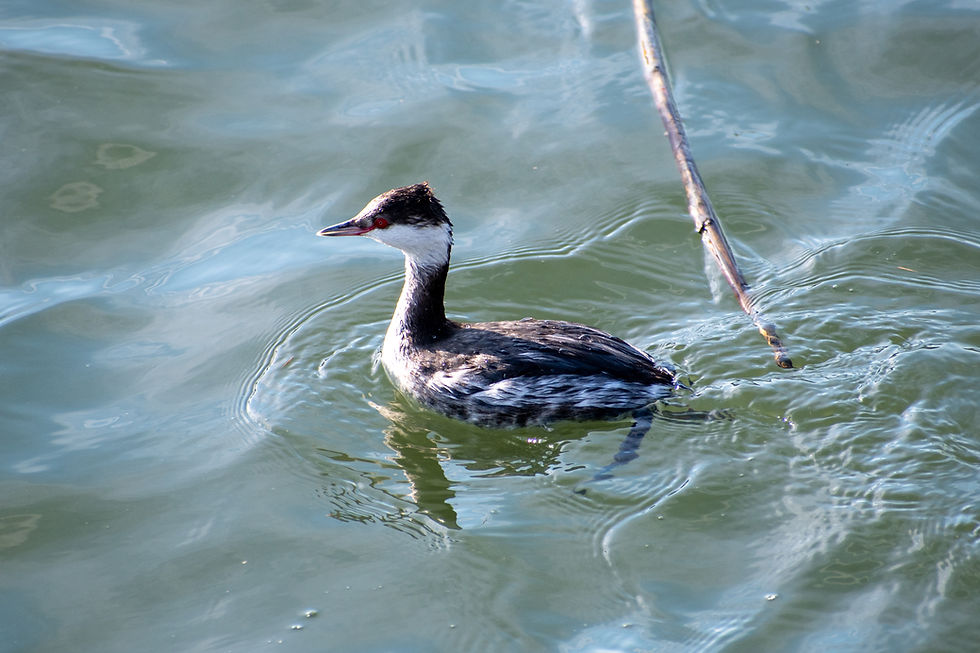
Winter is also the best time to search for Nelson’s Sparrows and Saltmarsh Sparrows alongside the year round Seaside Sparrow. These secretive marsh birds become some of the area’s most sought after winter specialties.
The surrounding habitats add another layer of excitement during winter. Cedar Waxwings are common in Old Mount Pleasant during the cooler months, while Ruby-crowned Kinglets and White-throated Sparrows can often be found in the trees and shrubs around the park. Savannah Sparrows are regular visitors to the marsh edges and grassy areas, adding to the season’s diversity.
Winter’s crisp mornings and excellent visibility often provide outstanding views across both the marsh and Charleston Harbor. Waterbirds spend much of their time on the open water, marsh sparrows become easier to target, and the comfortable weather makes it one of the most enjoyable seasons to spend a morning exploring Pitt Street Bridge.


Northern Harriers are another winter highlight at Pitt Street Bridge. They quietly patrol low over the marsh, searching the cordgrass for sparrows, rodents, and other small prey. Watching one drift across the marsh on a crisp winter morning is one of my favorite sights of the season.
For many birders, winter offers the greatest variety of species in a single visit. It’s one of the few times of year when diving ducks, loons, grebes, marsh sparrows, songbirds, raptors, and resident marsh birds can all be observed during the same morning.
Every Season Has Something to Offer
I’ve birded Pitt Street Bridge during every month of the year, and I still look forward to returning.
No single season is best.
Every visit is a little different. The tides change. Migration comes and goes. Birds nest, raise young, depart, and return. Even after hundreds of hours exploring this remarkable place, Pitt Street Bridge continues to surprise me.
That’s what keeps drawing me back.
Every season reveals a different side of one of Charleston’s finest birding destinations.

Charleston’s Best Place to Experience Black Skimmers
If someone asked me where to experience Black Skimmers in the Charleston area, Pitt Street Bridge would be my answer.
During summer, adults from nearby Crab Bank make constant trips across Charleston Harbor searching for food for their growing chicks. The tidal creeks and shallow waters surrounding Pitt Street Bridge provide productive feeding habitat, bringing Black Skimmers remarkably close as they hunt. After feeding, they can often be seen flying back across the bridge toward Crab Bank, sometimes carrying fish for their chicks.
Black Skimmers hunt unlike almost any other bird. They fly just inches above the water with the longer lower half of their bill slicing through the surface. The moment that bill touches a fish, it snaps shut in an instant.
Watching a Black Skimmer follow the curve of a tidal creek before banking sharply overhead is one of the signature wildlife experiences of a Charleston summer. On busy mornings, dozens may pass the bridge carrying fish back toward Crab Bank, offering remarkable opportunities to watch this behavior up close.
You can certainly see Black Skimmers from many places around Charleston.
Very few places allow you to truly experience them.
Twenty Birds to Hope For at Pitt Street Bridge
These are not necessarily the twenty rarest birds you’ll find at Pitt Street Bridge. They are the twenty species that best tell the story of this remarkable place. Some can be seen during nearly every visit, while others require the right season, the right tide, or a little patience. Together, they capture what makes Pitt Street Bridge one of Charleston’s finest birding destinations.
1. Clapper Rail
The Voice of the Marsh
If Pitt Street Bridge has an unofficial mascot, it is the Clapper Rail.
Most visitors hear one long before they ever see it. Their loud, rhythmic calls echo across the marsh, especially during spring and summer. Around the Lowcountry, many locals still refer to them simply as “Marsh Hens.”
Seeing one is another matter.
Clapper Rails spend much of their lives hidden deep within the cordgrass, but Pitt Street places visitors directly beside their habitat. During quiet mornings and favorable tides, they sometimes wander into the open, offering unforgettable views.
For many visitors, their first clear look at a Clapper Rail becomes the moment they remember most.

2. American Oystercatcher
The Ambassador of the Oyster Beds
Few birds are more closely tied to Charleston’s salt marshes than the American Oystercatcher.
Their striking black and white plumage, bright orange bill, and loud piping calls make them impossible to overlook. They’re often one of the first birds that captures people’s attention.
When the tide is right, I like to time my walks so we can watch them feeding on the oyster beds. Seeing an American Oystercatcher carefully work an oyster open before pulling out its meal gives you a firsthand look at the behavior that earned this bird its name.

3. Black Skimmer
Charleston’s Summer Superstar
If one bird defines summer at Pitt Street Bridge, it is the Black Skimmer.
Adults from nearby Crab Bank make constant feeding trips across Charleston Harbor, often passing directly over the bridge carrying fish back to hungry chicks.
Watching one skim the surface of the water before banking sharply overhead is one of Charleston’s greatest wildlife spectacles.

4. Gull-billed Tern
The Crab Hunter
Most terns specialize in catching fish.
Gull-billed Terns often have other plans.
During low tide they patrol the marsh searching for fiddler crabs, insects, and other prey. Watching one hover over the mud before dropping onto a crab is one of the most fascinating wildlife behaviors you’ll see at Pitt Street.
It’s one of my favorite things to watch. They race across the marsh at incredible speed before reaching down to grab a fiddler crab. If you catch the moment just right, it almost looks as though the bird’s body has already flown past while its head is still reaching for the crab.
5. Royal Tern
The Harbor Fisherman
Royal Terns seem perfectly at home above Charleston Harbor.
Their graceful flight, shaggy black crests, and unmistakable calls are familiar sights and sounds throughout the summer.
Many carry fish and shrimp back toward Crab Bank, often passing surprisingly close overhead.
Their sharp calls overhead quickly become one of the most familiar sounds of summer at Pitt Street.

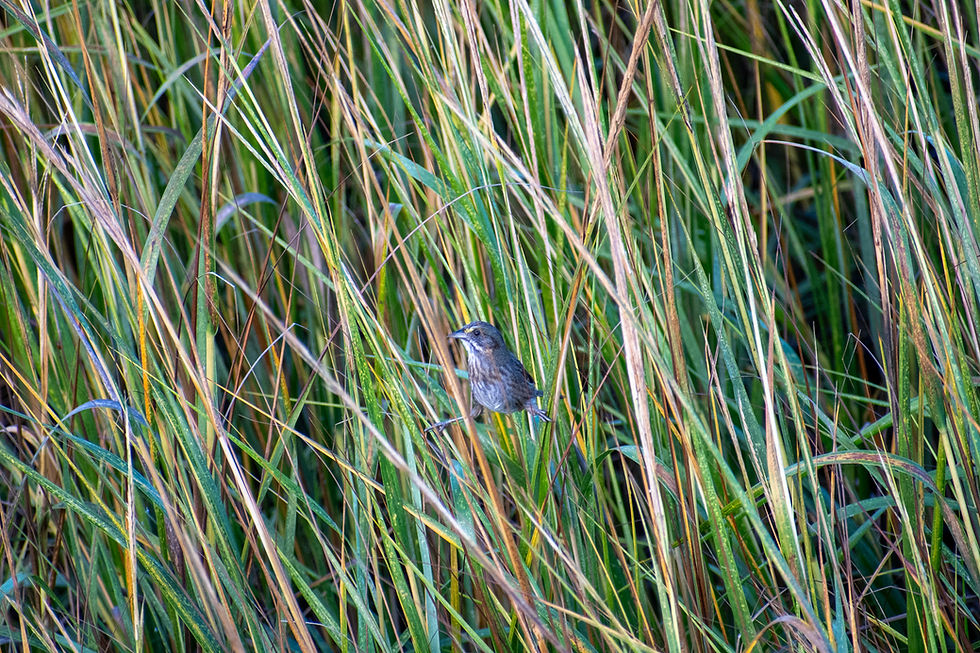
6. Seaside Sparrow
The Permanent Resident
Seaside Sparrows are year-round residents of the salt marsh at Pitt Street, although they can be surprisingly easy to overlook.
They often remain low in the cordgrass, where their sharp calls may give away their presence before they come into view. Occasionally, one will appear on an exposed stem or along the marsh edge, offering a better look.
7. Nelson’s Sparrow
The Winter Treasure
Every winter, birders arrive hoping to find one special bird.
Nelson’s Sparrows spend much of their time hidden deep within the marsh, making every good look feel like an accomplishment.
I have experienced some of my most memorable encounters with this species on the coldest winter mornings, when the sparrows are often more willing to forage in exposed areas along the edge of the marsh.
A close view of a Nelson’s Sparrow is never something I take for granted.

8. Saltmarsh Sparrow
The Coastal Specialist
Few birds are more closely tied to Atlantic salt marshes than the Saltmarsh Sparrow.
It spends nearly its entire life within tidal marsh habitat, making it one of the true specialists of the coastal ecosystem.
Winter offers one of the best opportunities to find this secretive species alongside Nelson’s and Seaside Sparrows.

9. Brown Pelican
The Acrobat
Few birds capture people’s attention quite like the Brown Pelican.
Whether soaring effortlessly above the harbor or crashing headfirst into the water after a fish, they never fail to entertain. Their spectacular plunge dives are one of the defining sights of Charleston’s coastline.
One of my favorite moments is when a Brown Pelican flies in from Charleston Harbor and passes directly overhead on its way across the bridge. From just a few feet away, you can truly appreciate their enormous wingspan, intricate feather patterns, and surprisingly graceful flight. A bird that looks enormous sitting on the water can appear remarkably effortless once it passes overhead.

10. Osprey
The Fisher
Few raptors are easier to enjoy than the Osprey.
Their high pitched whistling calls often drift across the harbor before one comes into view. Watching an Osprey hover briefly before plunging feet first into the water is always exciting, especially when it lifts off carrying a freshly caught flounder.
They’re one of the few raptors that visitors can watch hunting almost every day at Pitt Street Bridge.

11. Belted Kingfisher
The Rattling Fisherman
Belted Kingfishers are almost always a crowd favorite.
With their oversized heads, shaggy crests, and oversized bills, they have a personality that seems larger than life. Their loud rattling calls often echo across the marsh before the bird comes into view.
During the cooler months, they patrol the tidal creeks from exposed perches, hovering briefly before plunging headfirst after fish.

12. Great Blue Heron
The Patient Hunter
The Great Blue Heron is one of the birds almost everyone recognizes.
Towering over the marsh on long legs, they often remind people of a living dinosaur. Their slow, deliberate movements and prehistoric appearance make them an unmistakable presence at Pitt Street Bridge.
Some mornings a Great Blue Heron seems to own an entire creek. It may stand perfectly still for several minutes before striking with astonishing speed, reminding us that patience is often the key to a successful hunt.
Although many visitors have seen Great Blue Herons before, Pitt Street often provides remarkably close views, allowing you to truly appreciate the size, beauty, and quiet confidence of this iconic wading bird.

13. Snowy Egret
The Entertainer
Snowy Egrets rarely stand still.
They chase baitfish through the shallows, stir the mud with their bright yellow feet, spread their wings, and dart from one opportunity to the next.
They’re simply one of the most entertaining birds to watch at Pitt Street.
14. Tricolored Heron
The Painted Hunter
Tricolored Herons are among the most beautiful birds at Pitt Street Bridge.
Their rich blue gray plumage, chestnut neck, and crisp white belly make them one of the Lowcountry’s most colorful wading birds. Pitt Street Bridge’s elevated walkway often provides remarkably close views, allowing visitors to appreciate details that are easy to miss from farther away.
They move through shallow water with surprising speed, carefully stalking baitfish before striking with remarkable precision.

15. Marsh Wren
The Tiny Singer
For such a small bird, Marsh Wrens produce an incredible amount of sound.
Their cheerful, bubbling songs fill the marsh throughout spring and summer, often becoming the soundtrack of a morning at Pitt Street Bridge. Although they are common, they are surprisingly easy to overlook as they slip quietly through the cordgrass.
Marsh Wrens are also remarkable architects. They weave enclosed, ball shaped nests by stitching together living cordgrass stems, creating sturdy homes that rise and fall with the tides. Watching one disappear into its nest or suddenly burst into song from the top of the marsh grass is always a special moment.
Once you learn to recognize their voice, you realize the marsh is full of them.
16. Willet
The Neighborhood Watch
Willets are one of the most familiar shorebirds at Pitt Street Bridge.
These large shorebirds patrol the mudflats, oyster beds, and creek edges throughout the year, probing the marsh for crabs, shrimp, and other small prey. Their loud calls often ring across the marsh, making them one of the easiest shorebirds to notice.
At first glance, Willets appear fairly plain. But when one takes flight, it reveals a striking black-and-white wing pattern that often surprises first-time visitors. That bold flash of black and white is one of the easiest ways to recognize a Willet in flight.

17. Semipalmated Plover
The Little Charmer
Semipalmated Plovers are one of the most dependable shorebirds at Pitt Street Bridge during migration.
With their round heads, large dark eyes, short bills, and stop and go feeding style, they’re simply adorable. They seem to race across the mudflats before suddenly freezing to grab a tiny crab or other prey, then taking off again a few steps later.
They’re often one of the first shorebirds I point out during a bird walk because people instantly fall in love with them.
Despite their tiny size, they travel thousands of miles between Arctic breeding grounds and wintering areas farther south, making every stop at Pitt Street part of an incredible journey.

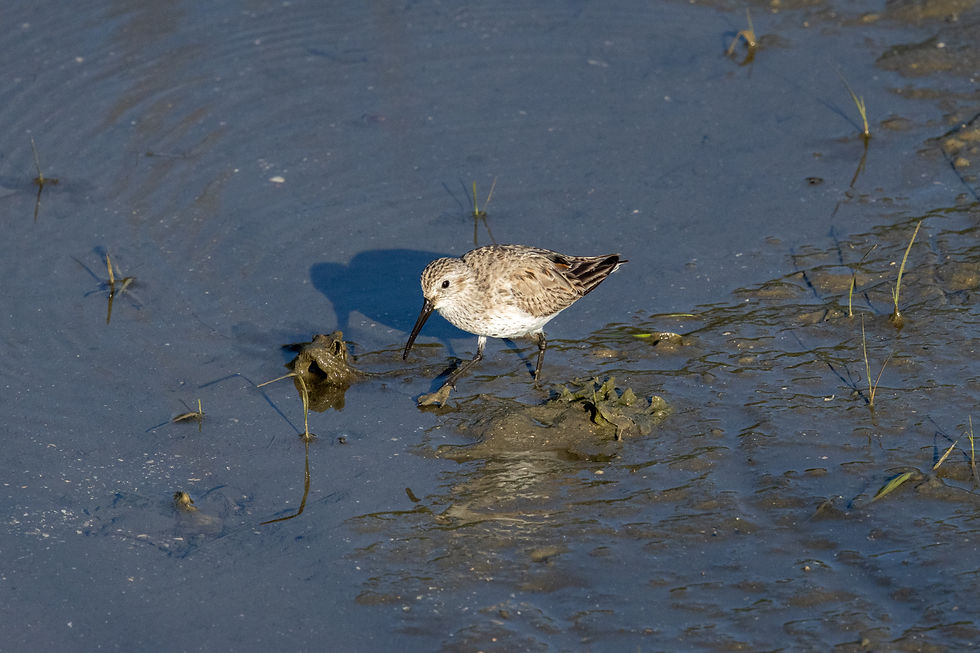
18. Dunlin
The Winter Flock
Dunlin are among Pitt Street Bridge’s most familiar winter shorebirds.
They often gather in impressive flocks, moving across the mudflats together as they probe the soft sediment for tiny invertebrates. Their slightly downcurved bills and stockier build help separate them from many of the smaller sandpipers they often feed beside.
Dunlin are also one of the shorebirds that seem to linger later into the season, providing excellent viewing opportunities throughout much of the winter.
When a flock suddenly takes flight, twisting and turning together before settling back onto the marsh, it’s one of winter’s most beautiful sights at Pitt Street Bridge.
19. Common Loon
The Winter Diver
Common Loons spend the colder months patrolling Charleston Harbor.
Watching one disappear beneath the surface before emerging far away is a reminder that much of the action happens below the water.
Although they don’t give their famous haunting calls on their wintering grounds, Common Loons remain one of the birds visitors are most excited to see. I most often encounter them in the Intracoastal Waterway between Pitt Street Bridge and Sullivan’s Island where patient birders are often rewarded with excellent views.

20. Bald Eagle
The Surprise
Bald Eagles are never guaranteed.
But every now and then one appears high above marsh or perched on a local dock, instantly drawing every pair of binoculars skyward.
Even after hundreds of visits to Pitt Street Bridge, I still stop whatever I’m doing to watch.

Many More Birds Await
The twenty birds above help tell the story of Pitt Street Bridge, but they are only the beginning.
One of the reasons I never tire of birding here is that every visit has the potential to reveal something different.
Resident birds such as Laughing Gulls, Boat-tailed Grackles, Fish Crows, and Northern Mockingbirds are part of the daily soundtrack of the park. Cooper’s Hawks quietly patrol the surrounding trees throughout the year. They’re surprisingly regular here, although many visitors never realize one has been watching from the canopy all along.
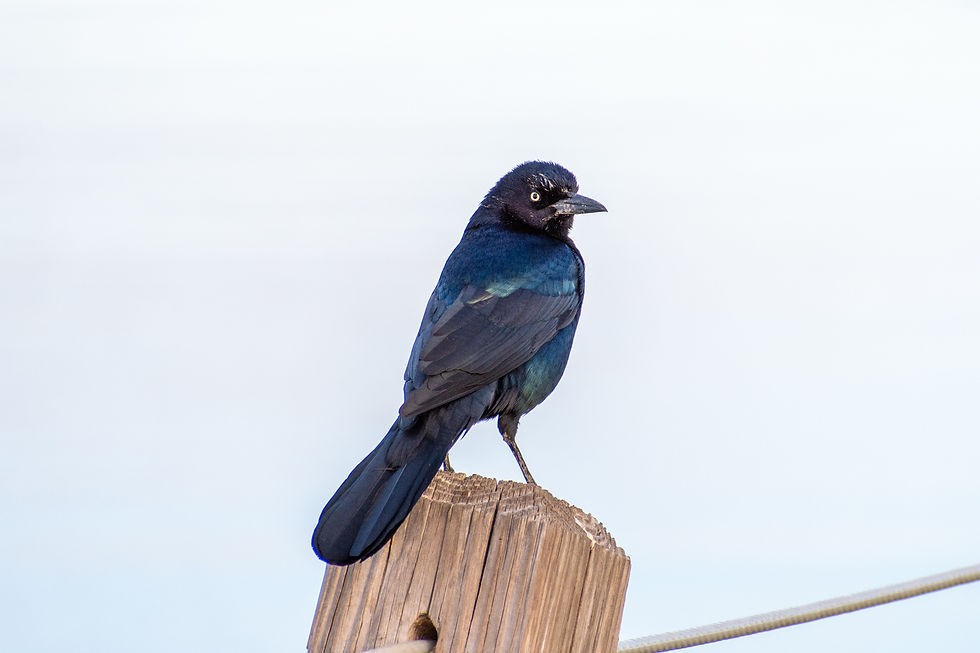


Depending on the season and the tide, you may also encounter Hooded Mergansers, Horned Grebes, Short-billed Dowitchers, Ruddy Turnstones, Least Sandpipers, Western Sandpipers, Cedar Waxwings, Ruby-crowned Kinglets, Yellow-rumped Warblers, and dozens of other species.
Even after hundreds of hours birding Pitt Street Bridge, I still arrive with the same sense of curiosity that brought me here the very first time.

Wildlife Beyond Birds
Birds may bring many visitors to Pitt Street Bridge, but they are only part of the experience.
Bottlenose Dolphins regularly travel through the tidal creeks and Charleston Harbor while pursuing schools of baitfish. Watching a dolphin suddenly surface in the middle of a bird walk never gets old.
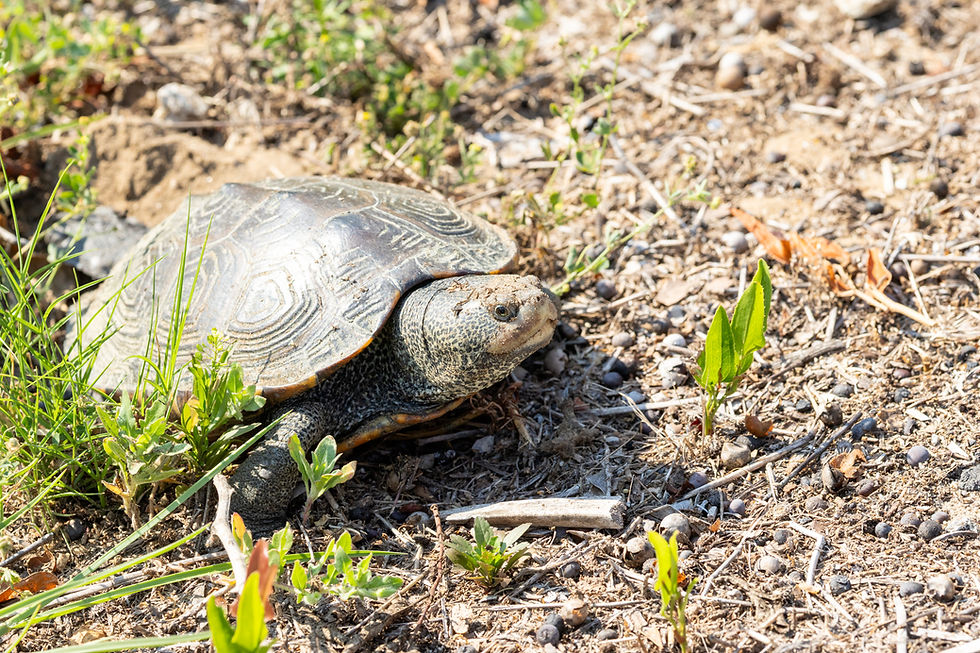
Diamondback Terrapins quietly surface beside the marsh during the warmer months, while stingrays glide across shallow mudflats and sharks occasionally patrol the same waters.

American Mink are far less predictable but sometimes appear along the marsh edge, offering one of Pitt Street Bridge’s rarest wildlife encounters.

The marsh itself is alive with fiddler crabs, blue crabs, shrimp, marsh snails, and countless smaller organisms. Schools of finger mullet ripple across the surface while dragonflies, butterflies, jellyfish, and other wildlife appear with the
changing seasons.
One of the things I enjoy most about leading bird walks at Pitt Street Bridge is that they rarely stay focused on birds alone. Before long, someone spots a dolphin, a terrapin, or a crab, and the entire ecosystem comes alive. That’s part of what makes this place so special.
Sunrise, Sunset, and the Best Light
Some of Pitt Street Bridge’s greatest moments have nothing to do with a particular species.
They begin with the light.
Sunrise
Sunrise is my favorite time to visit Pitt Street Bridge.
As the first light rises beyond Sullivan’s Island and the Isle of Palms, the marsh slowly comes alive. Charleston Harbor is often calm, the air is cool, and the day’s first birds begin to stir.
Clapper Rails call from the cordgrass. Wading birds step quietly into the creeks to feed. Brown Pelicans cruise low across the harbor, and the first Black Skimmers or terns may already be foraging alongside the bridge.
For photographers, the soft morning light is hard to beat. For birders, sunrise often brings a burst of activity and one of the most peaceful ways to experience the Charleston coast.
Sunset
Sunset offers an entirely different kind of beauty.
Looking west, the sun settles behind downtown Charleston as warm light spreads across the harbor and reflects off the marsh. The city skyline glows in the distance while egrets, pelicans, and gulls drift toward their evening roosts.
I’ve spent far more mornings than evenings at Pitt Street Bridge, but sunset has a magic of its own. The colors can be spectacular, the pace slows, and the marsh takes on an entirely different personality.
If I could only choose one, I’d still be there at sunrise.


Charles’ Pitt Street Insider Tips
Check the tide before you visit
The tide has a tremendous influence on where birds feed and what you’ll be able to see.
Arrive early
Sunrise usually offers cooler temperatures, beautiful light, calmer conditions, and a wonderful time to experience the marsh coming alive.
Slow down
Some of Pitt Street’s best moments happen only after you’ve stood quietly for several minutes.
Listen before you look
Clapper Rails, Marsh Wrens, Seaside Sparrows, Belted Kingfishers, Willets, and many other birds often reveal themselves by sound long before they’re seen.
Look up
Black Skimmers, Royal Terns, Brown Pelicans, Ospreys, and other birds frequently pass directly overhead.
Look beyond the birds
Keep your binoculars down once in a while. Dolphins, Diamondback Terrapins, stingrays, fiddler crabs, and other wildlife are all part of the experience.
Give yourself more time than you think you’ll need
The walk is short, but the wildlife has a way of slowing you down.
My Perfect Morning at Pitt Street
If I could design the perfect first visit to Pitt Street Bridge, it would begin about thirty minutes before sunrise.
Walk slowly as the eastern sky begins to brighten beyond Isle of Palms and Sullivan’s Island.
Pause often.
Listen before looking.
The first sounds may be Clapper Rails calling from deep within the marsh or Boat-tailed Grackles greeting the morning. As daylight spreads across the harbor, Brown Pelicans begin fishing while Great Blue Herons and Snowy Egrets move quietly into the shallows.
By the time the sun clears the horizon, American Oystercatchers may be feeding along the oyster beds, Willets patrolling the mudflats, and Bottlenose Dolphins surfacing in the tidal creeks.
During summer, Black Skimmers and Royal Terns regularly cross the harbor toward Crab Bank, often carrying food back to their nesting colonies. During winter, the harbor may hold Common Loons, Horned Grebes, Hooded Mergansers, Buffleheads, and other winter visitors.
The birds change.
The tide changes.
The light changes.
Every morning tells a different story.
That’s exactly why I keep coming back.

Conservation and Birding Etiquette
Pitt Street Bridge is shared by birders, photographers, fishermen, runners, families, and nearby residents. A little courtesy helps everyone enjoy the park.
Give birds plenty of space, especially if they are feeding, resting, or nesting. Resist the temptation to crowd a bird for a closer photograph, and if a rare bird attracts a group of observers, be patient and allow everyone an opportunity to enjoy it.
Nearby Crab Bank is a reminder of why conservation matters. The island provides critical nesting habitat for Black Skimmers, Royal Terns, Least Terns, Brown Pelicans, and other colonial waterbirds. Many of the birds seen from Pitt Street Bridge depend on healthy oyster reefs, productive tidal creeks, protected nesting islands, and intact salt marshes.
Every visit is an opportunity not only to enjoy this remarkable place, but also to help protect it for the wildlife and the people who will enjoy it after us.
Experience Pitt Street Bridge With a Local Bird Guide
Birding Pitt Street Bridge on your own is always rewarding, but exploring it with a local guide can reveal an entirely different side of the park. Understanding the tides, identifying distant shorebirds, finding hidden marsh birds, and interpreting the behaviors unfolding around you often reveals details that many visitors would otherwise miss.
Holy City Birding offers guided bird walks at Pitt Street Bridge throughout the year, tailored to the season, tides, and the birds that are present that day.
Whether you’re new to birding, visiting Charleston for the first time, hoping to photograph coastal wildlife, or searching for Lowcountry specialties, I’d love to share one of my favorite places with you.
Happy Birding,
Charles


