.png)
Magnolia Plantation Birding Guide: What to See & When to Go

Updated: Aug 9

Magnolia Plantation & Gardens is one of Charleston’s most visited destinations, known for its historic beauty and sprawling landscapes. But beyond the gardens and walking paths, it’s also one of the best places in Charleston for birding and experiencing birdlife up close. If you’re interested in learning more, guided bird walks in Charleston are a great way to build your skills and explore similar habitats across the Lowcountry.
Magnolia Plantation Birding at a Glance
Best time to visit: Early morning, especially during spring and early summer
Best season: Spring through early summer for nesting wading birds, Prothonotary Warblers, Summer Tanagers, and other breeding birds
Top birding areas: Audubon Swamp Garden & Magnolia Marsh
Other productive areas: Perry Field Pond, Hiogh Dike Pond, wooded trails, garden edges, live oaks, and open grounds
Signature experience: The spring rookery, when egrets, herons, ibis, Anhingas, and other wading birds are nesting and raising young
Birds to watch for: Prothonotary Warbler, Wood Duck, Roseate Spoonbill, Black-bellied Whistling-Duck, Great Blue Heron, Great Egret, Little Blue Heron, Tricolored Heron, Black-crowned Night Heron, Painted Bunting, and Northern Parula
Beyond the birds: American Alligators and the classic cypress-tupelo swamp landscape
Best advice: Arrive early, move slowly, and listen as much as you look
Why Magnolia Plantation is One of Charleston’s Best Birding Locations
Magnolia Plantation & Gardens offers something that many birding locations don’t: a wide range of habitats all in one place. Within a relatively short walk, you move through cypress swamp, freshwater edges, open grounds, wooded trails, and a large freshwater impoundment alongside the Ashley River. That diversity is what makes Magnolia so productive for birds throughout the year.

The swamp areas in particular create ideal conditions for species that rely on standing water and dense vegetation, while the impoundment and surrounding edges attract a wide variety of wading birds and other wildlife. The surrounding forest and open spaces support everything from songbirds to larger species, creating a well-balanced and active birding environment. Whether you’re new to birding or have years of experience, Magnolia consistently provides opportunities to see and hear a variety of species in a beautiful setting.
Best Birding Spots at Magnolia Plantation
Audubon Swamp Garden
This is the heart of birding at Magnolia Plantation and Gardens, and it’s where most visitors will have their best encounters.

The boardwalk takes you directly through a classic Lowcountry cypress-tupelo swamp, and in spring and summer, this area becomes one of the most active wildlife environments in Charleston.
One of the most unique aspects of the Audubon Swamp Garden is that many of the area’s wading birds use this habitat as a nesting site each spring and early summer. This creates a seasonal rookery, where birds gather in colonies to nest and raise their young. Timing your visit early in the morning or later in the afternoon typically provides the most activity, especially during peak nesting in April through early June.

During this time, visitors may observe constant activity from species such as Great Egret, Great Blue Heron, Snowy Egret, Little Blue Heron, Tricolored Heron, Black-crowned Night Heron, White Ibis, Anhinga and Green Heron. Seeing a rookery in action is completely different from typical birding, with constant movement, vocalizations, and interactions between birds. Spring and early summer are the best times to experience peak nesting activity.

For those paying closer attention, the swamp also offers opportunities to find smaller, more specialized species. Birds like the Prothonotary Warbler nest in tree cavities over the water and move actively through the canopy. They are often heard before they are seen, and locating them may take a bit of patience or familiarity with their song.
Keep an eye along the water’s edge and on fallen logs for additional wildlife, and take your time scanning the shaded areas where movement can be subtle but rewarding.
Another species that has become a regular, though less common, sight in the swamp is the Black-bellied Whistling-Duck. While not typically seen in large numbers, they are an exciting find and stand out from most duck species with their long legs and tendency to perch in trees.

In addition to birdlife, Magnolia is one of the best places in Charleston to observe the American Alligator in the wild. They are commonly seen across the grounds, especially in the Audubon Swamp Garden and around the freshwater impoundment, and can typically be viewed from a safe distance along the trails and boardwalk.

Wooded Trails and Garden Edges
As you move away from the swamp, the wooded paths and garden edges offer a different kind of birding experience, one that’s often defined more by sound than sight.

These areas are full of songbirds year-round, but activity peaks in spring when the canopy comes alive with singing birds establishing territories. On a recent visit, I had multiple Summer Tanagers singing high in the treetops, their bright, robin-like songs carrying through the woods. Birds like these can be surprisingly difficult to spot, even when they’re close, making listening just as important as watching. Fall can also be an excellent time to visit, as a wide variety of migrating songbirds pass through, though they tend to be quieter and more difficult to detect.
This habitat also supports more specialized and harder-to-find species. Birds like the Swainson’s Warbler prefer dense understory and are far more often heard than seen, rewarding those who listen carefully.
Throughout these wooded areas, you’ll find a steady presence of resident songbirds, including White-eyed Vireo, Northern Cardinal, Carolina Wren, Tufted Titmouse, and Carolina Chickadee. Warblers are also well represented here, especially during spring and early summer, with species such as Northern Parula and Yellow-throated Warbler arriving to nest, while Pine Warblers can be found year-round. These birds are often seen moving through the canopy, particularly around mature trees and hanging Spanish moss.
During migration, these same areas can become even more active, attracting a variety of transient songbirds. It’s not uncommon to encounter warblers, vireos, thrushes, and other migrants moving through the canopy and edges as they pass through the Lowcountry.
Slowing down, listening carefully, and scanning different levels of the forest can turn what first feels quiet into one of the most rewarding parts of the experience.
Open Grounds, Live Oaks, and Edge Habitat
The open grounds at Magnolia Plantation and Gardens are defined less by manicured space and more by a natural mix of mature live oaks, Spanish moss, scattered shrubs, and soft transitions into thicker vegetation. These areas create what birders refer to as “edge habitat,” where different environments meet and bird activity tends to be highest.

The large live oaks provide structure, shade, and excellent perching opportunities, while supporting a rich variety of insects that serve as a key food source for many bird species. The surrounding brush and low growth offer additional cover, creating a layered habitat that birds move through throughout the day.
In late spring and summer, these edges can be especially productive. Species like the Northern Parula are often found moving through the canopy of live oaks, frequently associated with hanging Spanish moss where they nest and forage. You’ll often hear their buzzy songs overhead before catching a glimpse of them.
These areas are easy to overlook at first glance, but slowing down along the edges and scanning both the canopy and lower vegetation can often lead to some of the more subtle and rewarding sightings on the property.
Magnolia Marsh & Observation Areas
Magnolia Marsh, the large freshwater impoundment at Magnolia Plantation and Gardens, is one of the most productive areas on the property for birdlife. Originally shaped by historic land use, this shallow freshwater habitat now supports a wide range of species throughout the year.
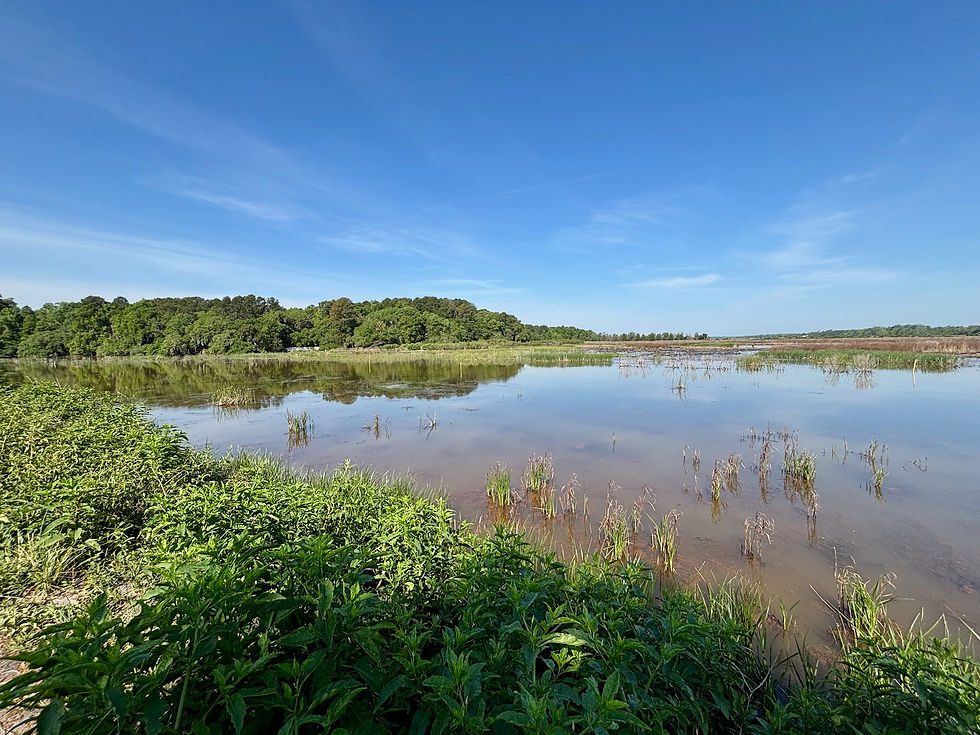
Positioned near the Ashley River, the impoundment creates ideal conditions for wading birds and other wildlife. The center area remains largely undisturbed, acting as a natural refuge where birds can feed and rest with minimal disturbance. From the edges, you can often observe constant movement and activity across the water.
In recent years, restoration work on the impoundment and its barrier improved water control and habitat stability. While this created some temporary disruption at the time, the area has since settled into a highly productive environment for birds. Today, even with the nature boat tour operating along the perimeter, the marsh in the center remains relatively undisturbed and continues to provide excellent habitat for feeding and resting birds.
Depending on the season, the impoundment can host a wide variety of wading birds, often all feeding within view. It’s common to see species such as Great Egret, Snowy Egret, Great Blue Heron, and Tricolored Heron working through the shallow water alongside one another. Species like Black-necked Stilt may also be present, along with flocks of Red-winged Blackbird moving through the grasses. Shorebirds, including various sandpiper species, can often be found along the edges as well.
One of the most exciting birds to encounter here is the Roseate Spoonbill, whose bright pink coloration often surprises visitors. It’s not uncommon for people to mistake them for flamingos at first glance, but they are a unique species well-suited to the Lowcountry’s coastal habitats.
In addition to wading birds, the impoundment can attract seasonal species like Least Tern, typically present from late spring through summer, where they can often be seen actively foraging over the water in small, scattered flocks. Their presence, along with the constant activity across the impoundment, adds to the sense that this area is always in motion.

Much of the impoundment can be viewed by walking sections of the perimeter, and there is also an observation tower that provides an elevated perspective over the landscape. While access to certain areas may vary, it remains one of the most active and rewarding areas to spend time during a visit.
Birds You Might See Throughout the Year
Bird activity at Magnolia Plantation and Gardens changes with the seasons, but the combination of habitats means there is always something to look for.
In spring and early summer, the focus shifts to breeding birds and migratory arrivals. Species like the Prothonotary Warbler and Summer Tanager arrive in April and become active and vocal as they establish territories and nest. The Painted Bunting is another seasonal highlight, most often found from late spring through summer in the right habitat before migrating south again.
The gardens and surrounding areas also attract Ruby-throated Hummingbirds, which are drawn to the abundance of blooms and can be seen feeding throughout Magnolia Plantation from spring through early fall.
In spring and early summer, the swamp rookery is also at its peak, with a great variety of wading birds nesting and raising young. Species such as Great Blue Heron, Great Egret, Snowy Egret, White Ibis, and Tricolored Heron are all active during this time, with additional species like Little Blue Heron, Green Heron, and Black-crowned Night Heron often present as well.
While seasonal changes bring new activity, many birds can be found here throughout the year. Wood Ducks are a consistent presence and often nest locally, with ducklings commonly seen in spring and early summer. Many of the wading birds found in the rookery, including Great Blue Heron, Great Egret, and White Ibis, can also be seen year-round, moving between the swamp, impoundment, and surrounding habitats depending on conditions.
Spring and fall migration can bring an added layer of excitement, as a variety of songbirds pass through the area. The mix of habitats and abundant food resources makes Magnolia an excellent stopover location, and it’s not uncommon to encounter warblers, vireos, thrushes, and other migratory species moving through.
In winter, bird activity shifts again, with different species taking advantage of the quieter landscape. Waterfowl and other wetland birds can be more noticeable, while species such as Hermit Thrush and Ruby-crowned Kinglet are often found in the wooded areas. Rails and other more secretive species may also be present in the impoundment, adding another dimension for those willing to explore more carefully
Best Time of Day for Birding
If you’re planning a visit, timing can make all the difference.
Early morning is by far the most active time for birds. The combination of cooler temperatures, softer light, and increased feeding activity creates ideal conditions for both seeing and hearing birds. This is especially true in areas like the swamp and wooded trails, where bird activity can be constant during the first few hours of the day.
Late afternoon can also be productive, particularly around more open areas like the freshwater impoundment, as the light softens and temperatures begin to drop. Midday tends to be quieter, but it’s still a beautiful time to explore the property at a slower pace.
Tips for Birding at Magnolia Plantation
A few simple tips can make your visit more enjoyable and productive.
Bring a pair of binoculars if you have them, and take your time moving through the boardwalks and wooded trails. If you enjoy photography, a camera can also be worthwhile, as Magnolia is a popular destination for photographers, with a mix of gardens, wildlife, and natural light that creates excellent opportunities for capturing images. Many of the best sightings happen when you slow down, listen carefully, and allow the environment to settle around you.

It’s also helpful to pay as much attention to sound as to movement. In many parts of Magnolia, especially in the swamp and wooded areas, birds are often heard before they are seen.
It’s also worth being prepared for typical Lowcountry conditions. In warmer months, mosquitoes can be present, especially in shaded swamp areas. Light layers and insect repellent can make a big difference.
A Few Lesser-Known Spots to Explore
Perry Field Pond
Perry Field Pond can be a great place to observe many of the same wading birds found elsewhere at Magnolia, but it also has the potential to produce more specialized species. In spring and summer, birds like the Least Bittern may be found tucked into the marsh grasses, and the edges can be productive for shorebirds such as Spotted Sandpiper and Solitary Sandpiper. On the opposite end of the pond, where it opens toward the larger Magnolia Marsh impoundment, this area can also attract swallows at times, especially when they are feeding low over the water.

When water levels drop and muddy edges are exposed, the pond can become especially attractive to a wider range of birds. Species like Wilson’s Snipe may be found probing along the soft edges, along with other shorebirds taking advantage of the changing conditions. Birds like the Black-necked Stilt can also sometimes be observed at closer range here compared to the larger impoundment.
Perry Field Pond is located past the Observation Tower along the outer path near the edge of Magnolia Marsh. It’s tucked into a quieter corner of the property where marsh and open-water habitat meet.
Indian Mound Pond and Surrounding Habitat
Indian Mound Pond itself can be active, but the surrounding habitat is where it really stands out. The transition zone between woods and wetland is a great place to look for species like Blue Grosbeak, while the wetter areas can hold Indigo Bunting and the often-overlooked Common Yellowthroat, a striking bird with a distinctive black mask and bright yellow throat.
Indian Mound Pond is located on the far western side of the property along the main outer path. It’s easy to pass by, but this quieter stretch offers a nice mix of wetland and woodland edge habitat.

Because these locations are not always clearly marked on current maps and access may vary, they’re best approached with a sense of exploration. If you come across them during your visit, they offer a peaceful setting to slow down, observe, and take in your surroundings.

These spots aren’t always clearly labeled on current maps, so use this reference as a general guide while exploring.
Explore Birding Beyond Magnolia Plantation
Magnolia Plantation is a great introduction to birding in Charleston, but it’s just one of many incredible locations in the area.
If you'd like to explore more of what the Lowcountry has to offer, I offer guided bird walks in Charleston that focus on finding and identifying local species across a variety of habitats.
Whether you’re visiting for the first time or looking to deepen your experience, birding is one of the best ways to connect with Charleston’s natural side.
Is Magnolia Plantation good for birding? Yes, Magnolia Plantation and Gardens is one of the best birding locations in Charleston due to its mix of cypress swamp, woodland, open grounds, and a large freshwater impoundment (often referred to as Magnolia Marsh) that sits alongside the Ashley River. This combination of habitats supports a wide variety of birdlife throughout the year.
What birds can you see at Magnolia Plantation? Magnolia offers a mix of common and sought-after species. Visitors can often see birds like Wood Duck and a variety of wading birds including Great Blue Heron, Great Egret, and White Ibis.
During spring and summer, species like the Prothonotary Warbler and Painted Bunting can be found in the right habitat, while standout birds such as Roseate Spoonbill and Black-necked Stilt are a major highlight when present.
One of the biggest attractions is the seasonal rookery in the Audubon Swamp Garden, where multiple species of wading birds nest and raise their young, creating constant activity.
What is the best time to go birding at Magnolia Plantation? Early morning is the best time to visit, when bird activity is highest and temperatures are cooler. This is especially productive in the swamp and wooded areas, where birds are most active during the first few hours of the day. Late afternoon can also be a good time, particularly around the freshwater impoundment, as birds return to feed and light conditions improve.
Seasonally, spring and early summer offer the most activity with breeding birds and nesting wading birds, while fall migration can bring a wide variety of songbirds passing through the property.